
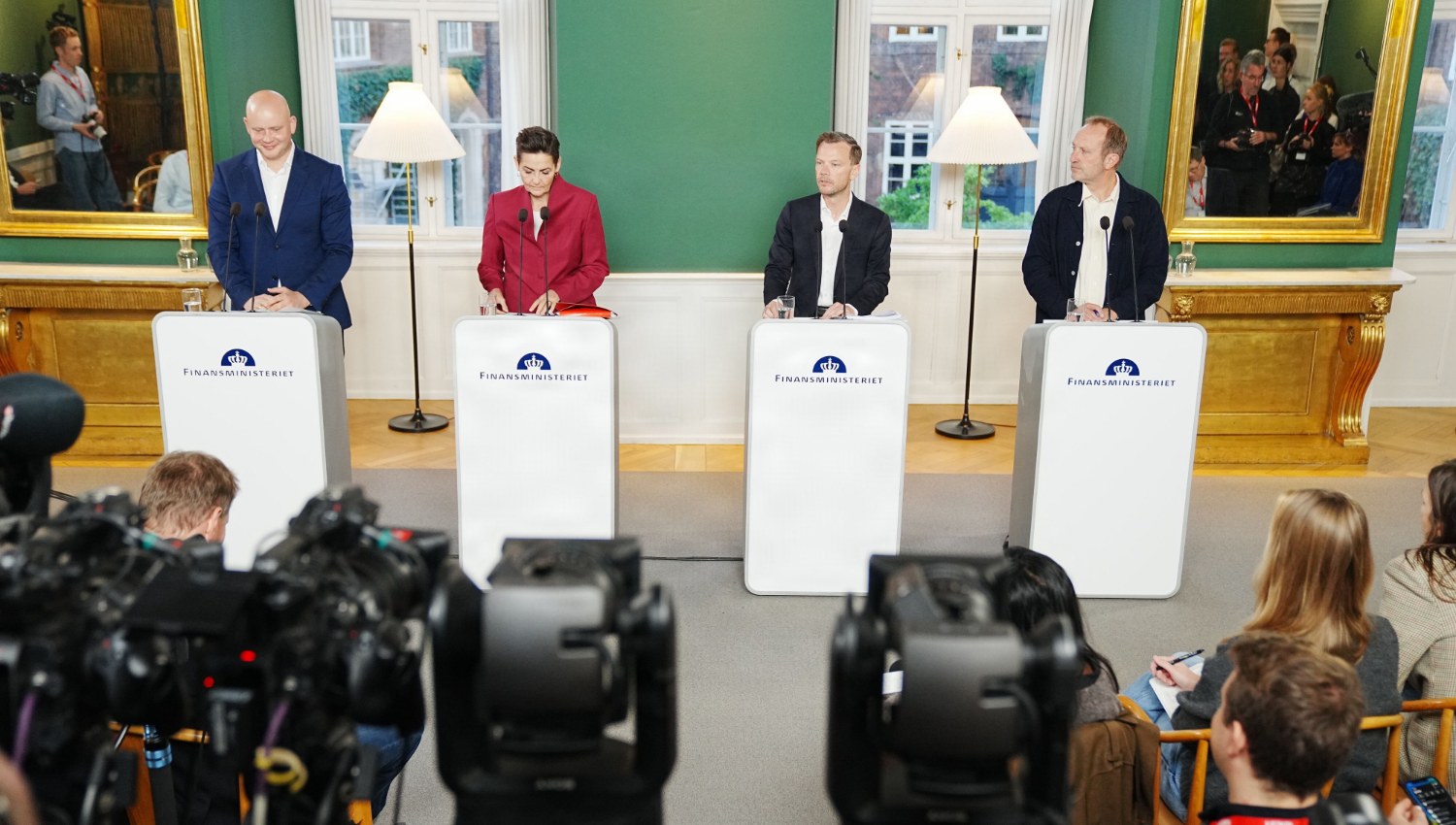

Finance minister Peter Hummelgaard presented his first budget on 9 October, tightening student grants and early pensions to help pay for higher defence spending. He said the plan required tough priorities, as the government aims to lift defence spending to 3.5 per cent of GDP by 2030.
The biggest saving comes from student grants. Students who live with their parents will lose the grant if their parents’ combined income is above 420,000 kroner a year, far lower than the 710,000-kroner threshold the government had signalled earlier, which means almost no students living at home will qualify. Rules for the senior pension, aimed at people worn down by work or illness, also become stricter. Applicants who cannot work more than 15 hours a week will be assessed against every type of job, not just their former occupation, a change expected to save 800 million kroner a year by 2030. A new levy on cruise ships is also included.
Defence spending is set to reach 3.41 per cent of GDP in 2027, rising each year to 3.50 per cent in 2030, while civil defence and national preparedness receive an extra 1 billion kroner annually. Elsewhere, municipalities and regions get about 6 billion kroner more for welfare, schools and daycare receive 1.2 billion kroner, and the early retirement pension rises by 3,095 kroner a month from 1 January 2027. Low-income pensioners will get an extra 1,000 kroner after tax.
On the tax side, the budget contains more than 10 billion kroner of cuts by 2030. The middle tax bracket and the top-top rate are abolished, corporation tax falls by 3 percentage points and the ceiling on the tax-favoured share savings account triples to 500,000 kroner. The think tank Cepos puts the net tax cut at 2.2 billion kroner in 2030. Critics point out that the reductions arrive at the same time as cuts to benefits. Hummelgaard said in his budget speech that “the Danish economy is in top shape”.
Economy minister Pia Olsen Dyhr, who leads the Green Left, described the package as “a compromise”. Many of the measures were already known from the government’s platform or earlier announcements. The government now has to find a parliamentary majority for the 2027 budget and has set aside a negotiating reserve of 500 million kroner a year for 2027 to 2030.