
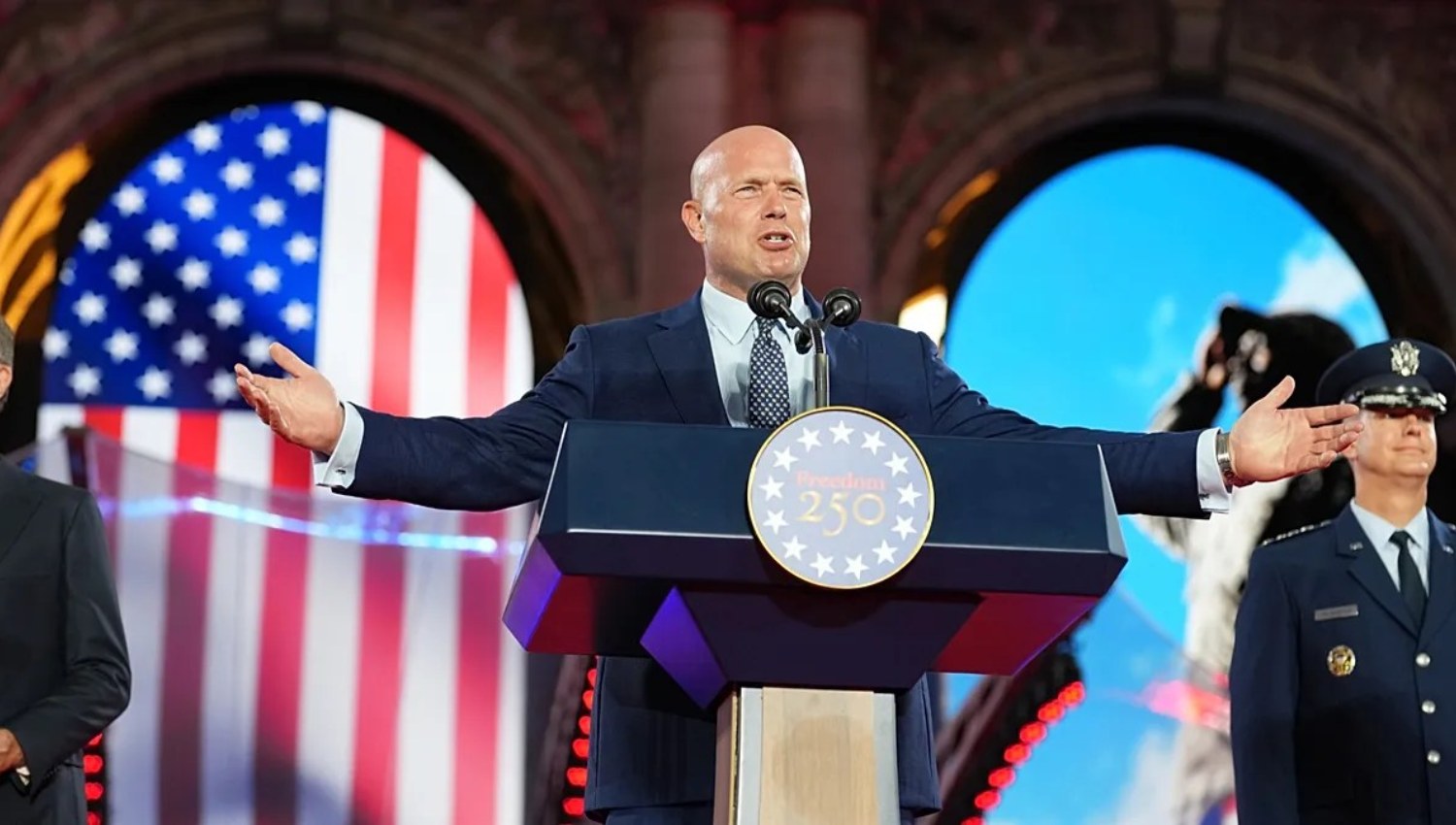

The US ambassador to NATO, Matthew Whitaker, has told European allies that Washington remains committed to their defence even as American forces are scaled back. Speaking alongside EU Defence Commissioner Andrius Kubilius at the Warsaw Security Forum on Monday, he said: “We still love you.”
The two men were speaking on a panel about NATO 3.0, a US-backed model under which Europe takes the lead on conventional defence while American forces draw down and focus elsewhere. Since Donald Trump returned to the White House, Washington has shifted resources to other regions, including the Indo-Pacific, to counter China. Whitaker said he keeps telling European allies that the United States is not stepping back from its commitments on the continent.
Kubilius, who is Lithuanian, said the model does not mean Washington has stopped caring about Europe, but that Europe must build the capabilities to deter aggression on its own territory. In his words, Europe needs to take responsibility into its own hands. He has estimated that replacing US strategic assets could cost Europe up to €500 billion, and experts suggest the continent may need 300,000 more troops to defend against Russia if American support keeps shrinking.
Further cuts are possible. A Pentagon review of US deployments in Europe is expected to be completed by December and passed to Defence Secretary Pete Hegseth. In May, the Pentagon ordered about 5,000 troops out of Germany and cancelled a planned deployment of a long-range fires battalion. Whitaker declined to preview any further steps, saying the review was not ready. He argued that the push for a more European NATO is working and pointed to Poland, which spends 4.7 per cent of GDP on core defence, as the example Washington expects all allies to follow.
At the 2025 Hague summit, NATO members agreed to raise core defence spending from 2 per cent to 3.5 per cent of GDP by 2035, with another 1.5 per cent for wider security, bringing the total to 5 per cent. The EU aims to strengthen its military capabilities by 2030, and European intelligence agencies have warned that Russia could pose a more direct threat to the alliance in the coming years. A leaked draft report from the European Defence Agency points to large gaps, especially in drone defence and maritime warfare.