
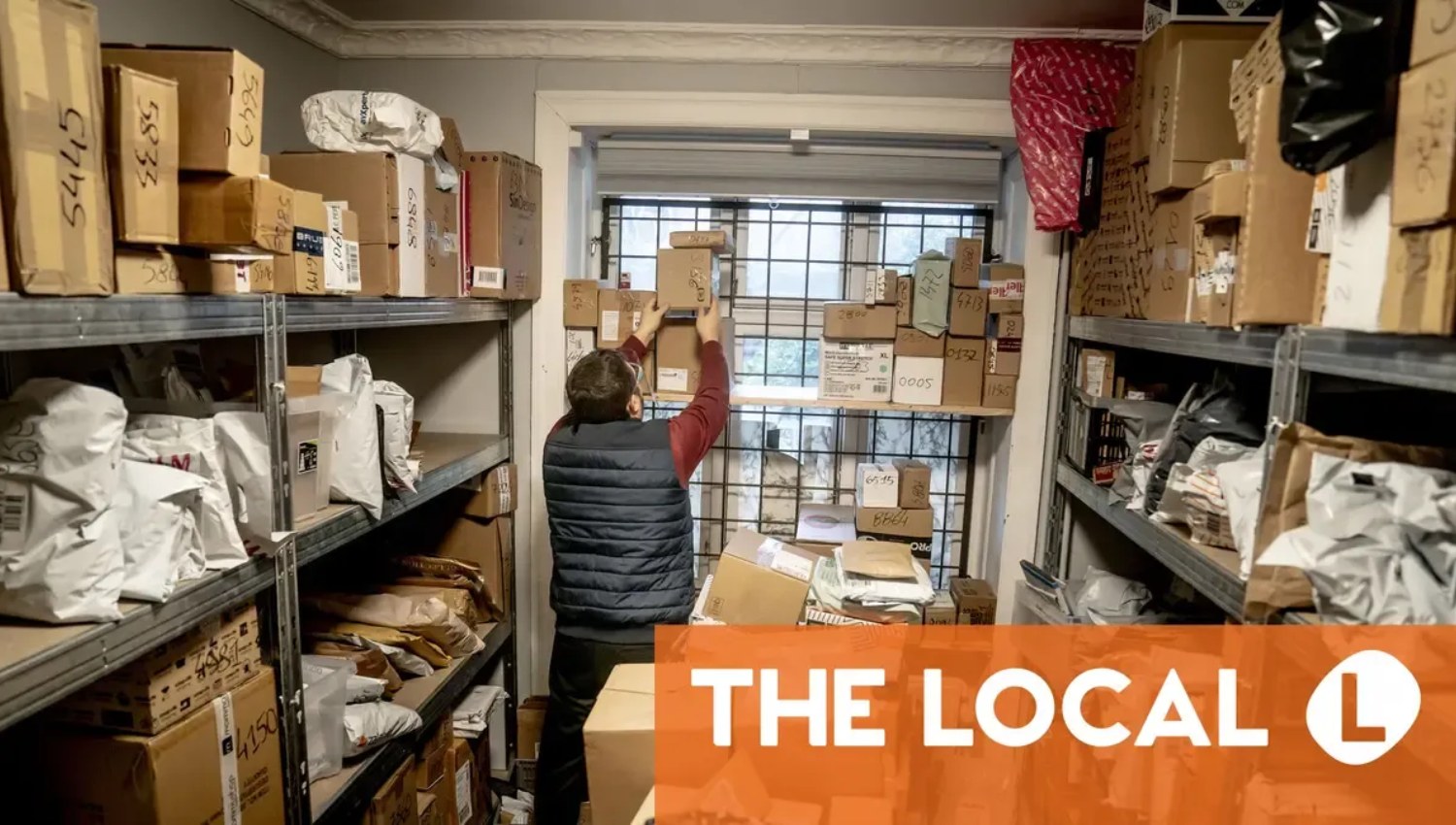

The number of small parcels passing through Danish customs has dropped sharply and quickly since an EU rule began charging a tariff on low-value shipments. Between 31 August and 6 September, customs recorded fewer than 10,000 small parcels, according to the Ministry of Tax and Growth.
The rule came into force on 1 July 2026 and adds a charge of at least three euros to parcels worth 150 euros or less. Because the minimum charge is a fixed sum, it adds most, in relative terms, to the cheapest orders. Before it was introduced, Danish customs logged between 1.6 and 2.2 million items a week. In the week before the change, the figure was about 400,000 small parcels, and it halved to roughly 200,000 in the first week after the tariff began.
Measured against the weekly totals recorded before the rule, the latest count represents a fall of more than 99 per cent. The ministry figures also show how quickly the change took hold. Registrations had already fallen well below the usual level in the final week before the charge applied, then halved within a single week of the tariff starting, and in the week starting 31 August the count was below 10,000.
Tax and Growth Minister Jakob Engel-Schmidt has presented the fall as evidence that fewer cheap, poor-quality goods from China are reaching Denmark. He described them as “items which far too often do not live up to the consumer protection standards” that apply in the EU. He hopes the fee will encourage Danish shoppers to buy from European sellers instead of ordering low-value goods from overseas, and he sees the customs figures as a sign that the policy is working as intended.
Not everyone accepts that reading. The Danish Chamber of Commerce, which represents retail and service businesses, says the items are still entering the country, and the courier company Dao agrees. Steen Breiner, Dao’s head of communications, told TV2 that the packages now arrive by truck from elsewhere in Europe instead of being flown into Danish airports. “The parcels are still here,” he said, adding that they are simply no longer registered at Danish customs. On that view, the customs data shows a change in the route the goods take into Denmark rather than proof that Danish consumers are buying fewer of them.