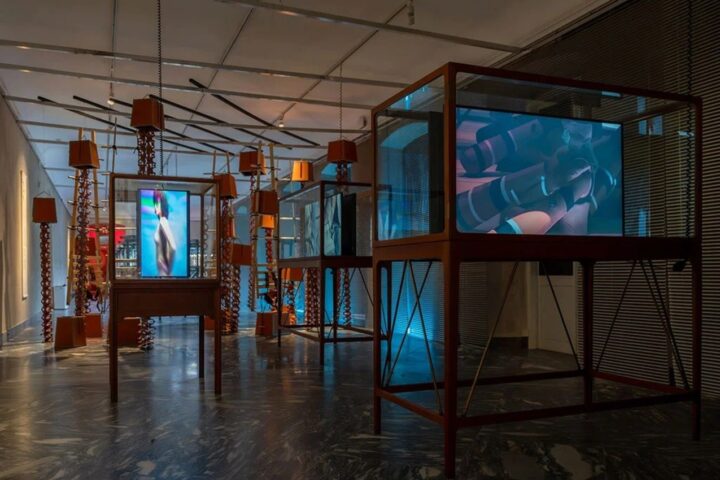


The Danish film director Nicolas Winding Refn is turning his attention to Hans Christian Andersen, with an exhibition that promises to draw out the shadows in the writer’s work. Announced on September 15, the show will open at the Black Diamond, the waterfront extension of the Royal Danish Library in Copenhagen, and will run from May 2027 into early 2028.
Refn, known for the stylised violence and saturated palette of films such as Drive, is curating the exhibition rather than directing a film, bringing his visual language to a figure most associate with children’s fairy tales. The show carries the Danish title Man kan ikke holde en god krukke nede, which translates loosely as you cannot keep a good pot down, and is billed as an immersive experience built around the darker corners of Andersen’s universe. Andersen, born in Odense in 1805, remains one of Denmark’s most recognised cultural exports, his tales translated into scores of languages.
The library framed the project as a way of reexamining a national icon. “Cultural heritage helps us understand who we are as people and nations,” said library director Bente Skovgaard Kristensen. “This exhibition opens the darker sides of Andersen’s universe, and perhaps ourselves.” The comment points to an intent to complicate the sanitised image of Andersen that has settled over more than a century.
Refn described the pairing in personal terms. “We will never know the true H.C. Andersen,” he said. “But I have realized he and I are the same person.” The remark fits a director who has often returned to themes of identity and menace, and who now finds an unexpected kinship with a nineteenth century storyteller whose tales carried a streak of cruelty beneath their surface.
The exhibition is scheduled to open on May 21, 2027, and to remain in place until March 19, 2028, giving it a long run at one of Copenhagen’s most visited cultural buildings. The Black Diamond, with its black glass facade on the harbour, has hosted exhibitions drawn from the library’s collections before. Placing a filmmaker at the centre of one signals an attempt to reach audiences who might not otherwise walk through its doors.