

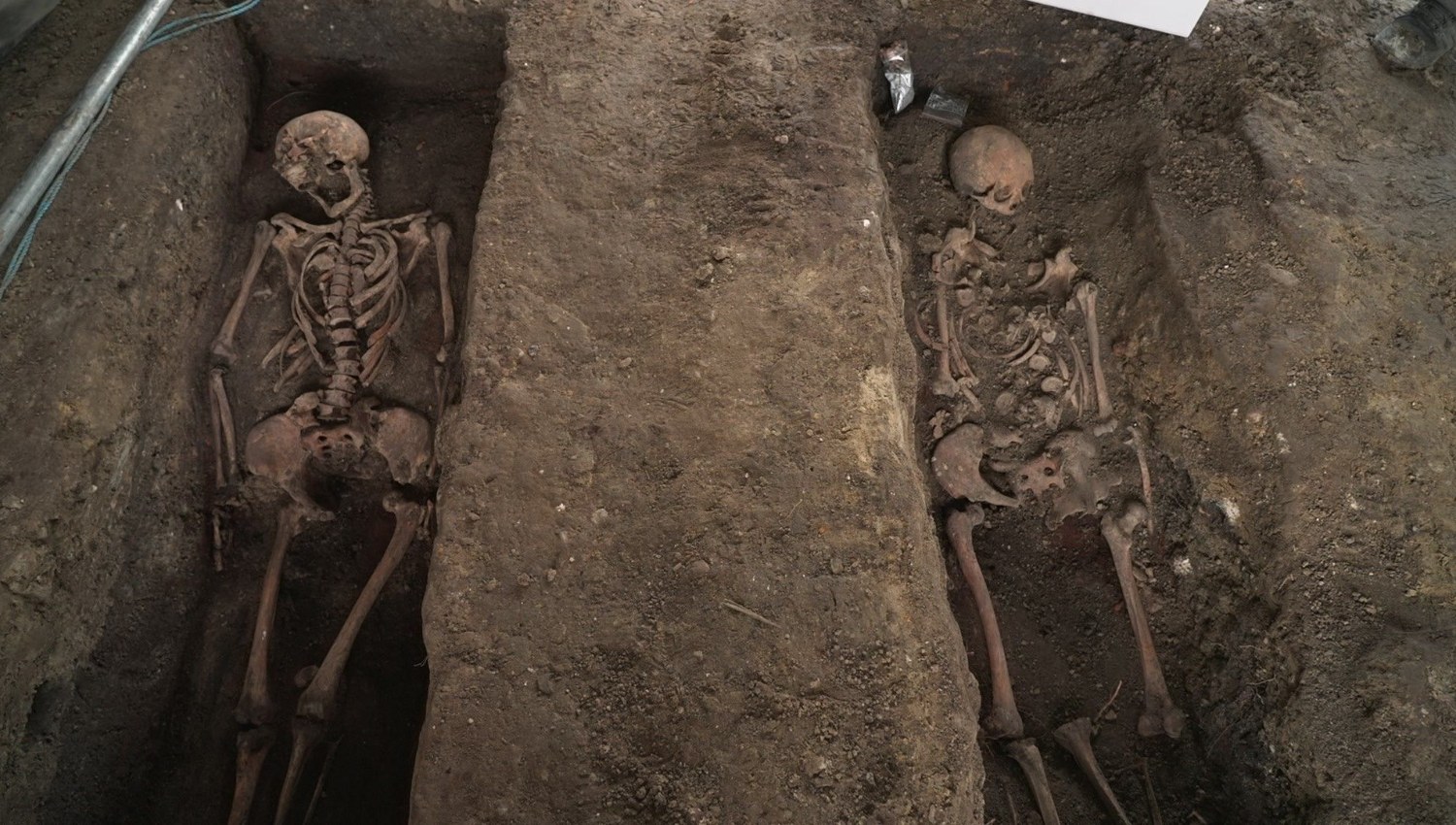

Archaeologists from the Museum of Copenhagen have now excavated more than 1,100 graves in Hans Tavsens Park in Nørrebro, TV 2 Kosmopol reports. The park stands on the district’s former poor cemetery, and the team says the number is still rising.
“We expect to find many more,” said Alma Foldbjerg El-Naaman, a museum archaeologist who specialises in human skeletons.
The dig covers 145 square metres of a park that is usually busy with local residents. Working with brushes and fine hand tools, the team is lifting out burials that are up to about 200 years old. They knew before they started that the ground would hold a large number of skeletons, because the site served as the burial place for the area’s poorest people. According to Ritzau, as carried by The Copenhagen Post, victims of the city’s 1853 cholera epidemic were also buried there, beside Assistens Cemetery.
The excavation has to happen before a planned redevelopment. Under the City of Copenhagen’s extreme rainfall plan, the park and neighbouring Hans Tavsens Gade will be joined into a single green area with a pumping station, so that the space can hold rainwater during cloudbursts and keep it out of nearby roads and basements. Construction started in autumn 2025 and is due to finish in spring 2028.
Most of the remains will go to the University of Copenhagen’s Anthropological Laboratory to be stored and examined, and some will get further analysis. The rest will be reburied in the park. Researchers plan to study the health of selected individuals and the way the graves were laid out, to learn more about the religious and cultural attitudes to death among the city’s poorer population. El-Naaman told TV 2 Kosmopol that relatively little is known about that group, which is part of what makes the work so interesting to her.
The museum opened the site to the public this week for free 45-minute tours, which had to be booked in advance on its website. The final slots were set for Thursday 15 October at 13:00, 13:15 and 13:30, starting from the park entrance at the end of Jesper Brochmands Gade, and visitors were warned that real skeletons could be on view.
One of those on a tour was the musician B-Joe Johansen, who has helped excavate Stone Age graves in the past. He described it as “insanely exciting” to meet some of the people who once lived on the same streets as Nørrebro’s residents today.