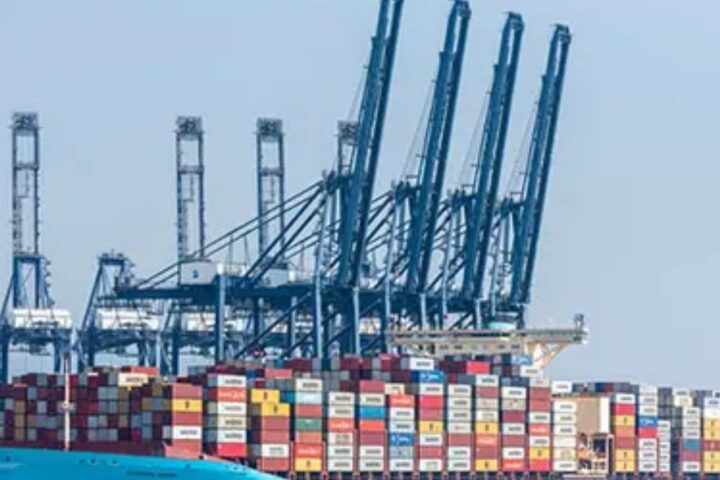


A.P. Moller-Maersk has confirmed that it ordered 26 new container ships, putting an end to weeks of market speculation about the Danish group’s building plans. Each vessel will carry up to 18,600 twenty-foot equivalent units and run on dual-fuel engines capable of using liquefied gas. The company said the ships are scheduled for delivery in 2029 and 2030.
The confirmation followed reports that Maersk had been in talks with shipyards for months. The company declined to name the yard building the vessels or disclose the price, a reticence typical of a group that prefers to announce firm commitments rather than negotiations. That left analysts to piece together the scale of the investment from shipyard filings and industry chatter, with trade publications linking the deal to a figure of several billion dollars.
The order builds on a February agreement for eight identical 18,600 TEU dual-fuel vessels, also due between 2029 and 2030. Together the two contracts take Maersk’s orderbook to roughly 35 percent of its existing fleet, a large share by the standards of container lines and a sign of how quickly the company is moving to renew its ships as older tonnage ages out of service.
Chief executive Vincent Clerc has argued that the group is nearing the limits of what its current fleet can deliver and that continued renewal is needed to keep pace with demand and tighter environmental rules. Dual-fuel engines allow ships to switch between conventional marine fuel and lower-emission alternatives, giving operators flexibility as cleaner fuels become more widely available at ports around the world.
The decision lands at a delicate moment for the shipping industry, which is weighing long-term investment against uncertain trade patterns and volatile freight rates. Vessels ordered now will not enter service for another three to four years, committing Maersk to a view of the market well into the next decade. Rivals have made similar bets, adding to a wave of new capacity that could reshape freight rates once the ships arrive. For a company built on the movement of goods across oceans, the size of the order signals confidence that container trade will keep growing even as the tools used to carry it change.