
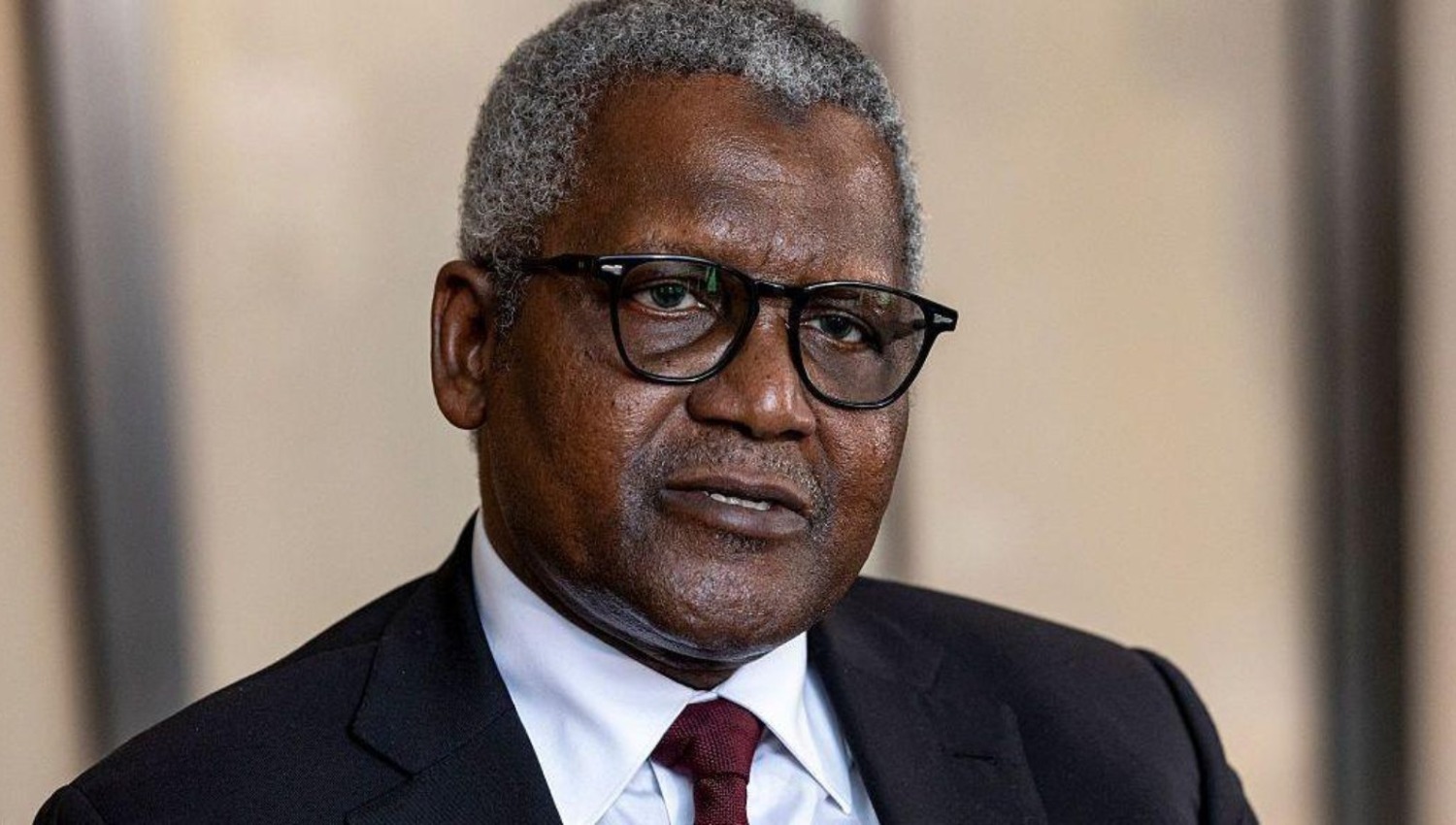

Nigerian billionaire Aliko Dangote, Africa’s richest man, has broken ground with Kenyan President William Ruto on a $16 billion (£12 billion) oil refinery in Lamu, on Kenya’s northern coast. Once complete, the plant is expected to process 700,000 barrels of crude a day, making it East Africa’s largest industrial project by capacity.
The refinery would be the only one in East Africa and is Kenya’s largest infrastructure project since independence, ahead of the $5.1 billion Standard Gauge Railway. It is also Dangote’s largest proposed investment outside Nigeria, where his Lekki refinery has the same 700,000-barrel daily capacity. He plans to double that after floating 4.1 million ordinary shares to raise up to $2.1 billion last month. The leaders of Uganda, Ethiopia, Togo and Benin attended the ceremony, and Dangote has offered regional governments a combined 30 percent stake in the Kenyan project, according to Reuters.
The launch went ahead despite protests by local residents seeking more compensation for land used for the refinery. Speaking to the BBC’s Focus on Africa programme, Dangote dismissed the protests and said the company had taken only the land it needed from the area the government made available. Walid Ali, co-founder of the Save Lamu campaign group, said residents wanted to see the findings of the environmental impact assessment. A group of 133 Lamu residents has gone to Kenya’s High Court to stop the work, and excavation and construction on the disputed land are restricted until a hearing on 14 October.
Dangote insisted the refinery would be ready by 2030 as planned and said it would create 60,000 jobs at the height of construction. Critics have questioned building it in Kenya, which does not produce oil, with some pointing to Tanzania or Uganda instead. Kenya’s Energy and Petroleum Minister Opiyo Wandayi said the refinery would buy crude on the open market, and Dangote cited Singapore as a refining hub that produces no oil of its own. “Lamu must prove that it can be repeated,” Dangote said, referring to his Nigerian plant.
The site will also include a 1,000-megawatt power plant to serve Dangote’s operations and other industries expected to move into the area. He sees unreliable electricity as a major brake on industrialisation in Africa and has about $50 billion of projects in the pipeline, including plans for 10,000 megawatts of generating capacity across the continent by 2030. Kenya has relatively high fuel prices, although international crude prices will remain a major factor in what drivers pay.