
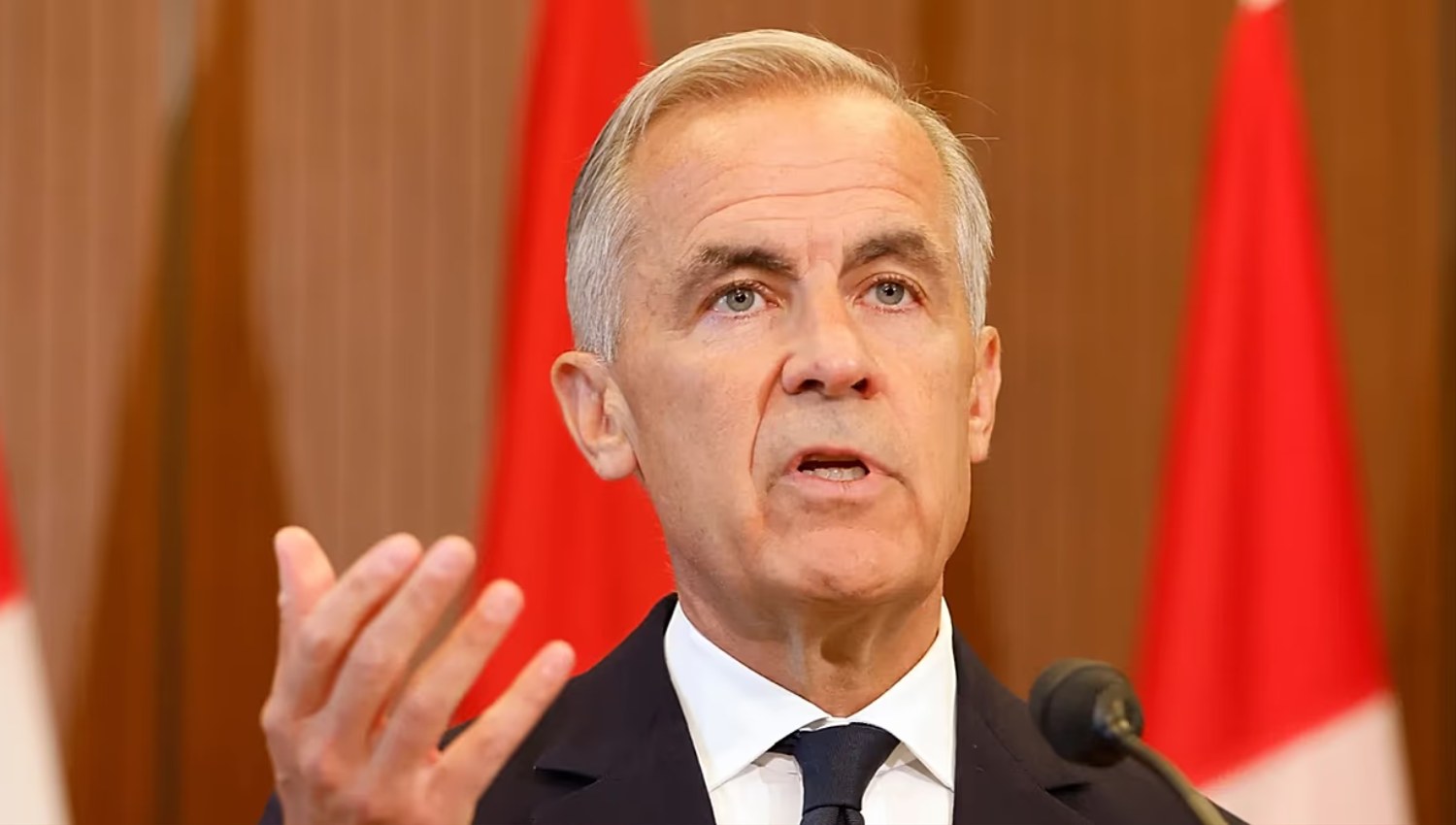
With its trade war with the United States flaring again, Canada is pledging to draw closer to the European Union. Prime Minister Mark Carney will attend Ursula von der Leyen’s State of the Union address in Strasbourg on 16 September, with a summit between Ottawa and Brussels to follow, though EU officials stress that full membership is not on offer.
Carney’s overture came after trade talks between Ottawa and Washington collapsed last week, with Canada accusing the US of interfering in its sovereignty by demanding French-language concessions. President Donald Trump responded on Truth Social by announcing that tariffs on cars and trucks would rise to 50% from 1 January 2027, writing that “WE DON’T NEED CANADA, THEY NEED US.” Canada countered with plans to impose tariffs of 15% to 50% on more than 700 American imports worth about 17.2 billion euros, effective 8 September.
“This fall we will begin intense discussions with the European Union, the world’s second-largest economy, to build a much stronger and deeper economic and security partnership,” Carney said. According to Politico, he confirmed his Strasbourg attendance following an invitation von der Leyen had extended before the latest dispute erupted. Since Trump’s return to power, Ottawa has repeatedly looked to Brussels as a stable, like-minded partner.
Yet both sides face limits. Canada and the EU are already bound by a trade agreement, and the questions now centre on how much further integration can go. Ottawa is expected to offer better access to critical raw materials such as lithium, graphite and nickel, helping Brussels reduce its dependence on China, and to discuss energy cooperation. “We should be talking about a more viable Canada-EU corridor for energy, and not just in respect of oil and gas, but also of nuclear,” said Mark Camilleri of the Canada-EU Trade and Investment Association. On defence, Canada is part of the EU’s 150 billion euro SAFE instrument and has selected the German-Norwegian firm TKMS to build a new fleet of 12 submarines.
Geography, though, sets a ceiling. Camilleri noted that Canada’s economy remains “very much oriented and integrated” with North America and that Ottawa is not seeking to untangle it. On membership, Guntram Wolff of the Brussels think tank Bruegel said there was “new openness” and that alignment “could go far,” while likely stopping short of accession. He pointed to Norway’s single-market model as a theoretical ceiling, but an EU official said that option was “not on the table yet” and, for now, remained an academic debate.