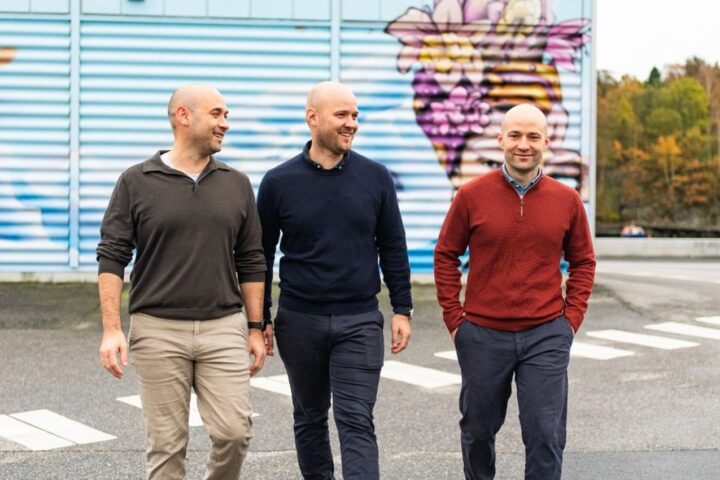



Spiich, a Stockholm startup building artificial intelligence agents for sales teams, has raised 3 million euros in a seed round led by Copenhagen firm Ugly Duckling Ventures. The financing, announced on 23 September, brings the company’s total funding to 3.6 million euros, including an earlier 600,000 euro pre-seed. Spiich was founded in June 2025 by Johan Torssell and Dennis Hadzialic, and is one of a wave of young Nordic teams building software around large language models.
The company targets the roughly 78 percent of a sales representative’s time that it says goes to tasks other than selling. Its agents take on prospecting, meeting preparation, customer relationship management updates and follow-up messages, with the aim of freeing staff to spend more hours with customers. Alliance VC and Cherry Ventures joined the round, with returning investor Ampli Ventures and angels drawn from Lovable, Neo4j, Tandem Health and OpenAI, a roster that reflects the tight network of operators backing early Nordic AI companies.
Louise Lachmann, general partner at Ugly Duckling Ventures, said the approach set the company apart from a crowded field of sales tools. “Spiich is the first we’ve seen that does the non-selling work rather than assisting with it,” she said. The distinction, she argued, is between software that speeds up a task and software that removes it from a person’s day entirely, a claim many rivals have made but few have delivered.
Torssell has been blunt about the limits of automation in a business built on relationships. “Have you ever bought anything from an AI agent? Almost nobody has,” he said. “You buy from someone you trust to deliver.” The framing positions Spiich as a tool for salespeople rather than a replacement, handling the administrative load while humans keep the conversations and close the deals.
The raise lands amid a steady flow of Nordic capital into applied artificial intelligence, much of it aimed at removing repetitive work from office roles. Spiich now competes with a growing set of firms promising to rebuild the software that sales teams use every day, betting that agents can quietly run the background work that customer relationship systems have never solved. The company plans to use the money to expand its engineering team and sign more customers across Europe.