

Byline: Mae / baden bower · Photo courtesy of Milton Coffee Co.
Matt Kossoff has owned both kinds of coffee machine that dominate home kitchens. He started as a capsule user, like millions of people, and later moved up to high-end espresso equipment. Living with both taught him something the industry rarely says out loud. Most people who care about coffee don’t fit either machine.
Capsule machines are fast and familiar, but most are built to a price, with plastic parts where the hot water meets the coffee. Serious espresso equipment makes a better cup, if you’re willing to buy a grinder, learn to dose and spend your mornings adjusting. Kossoff decided the people caught between those two choices were the market worth building for.
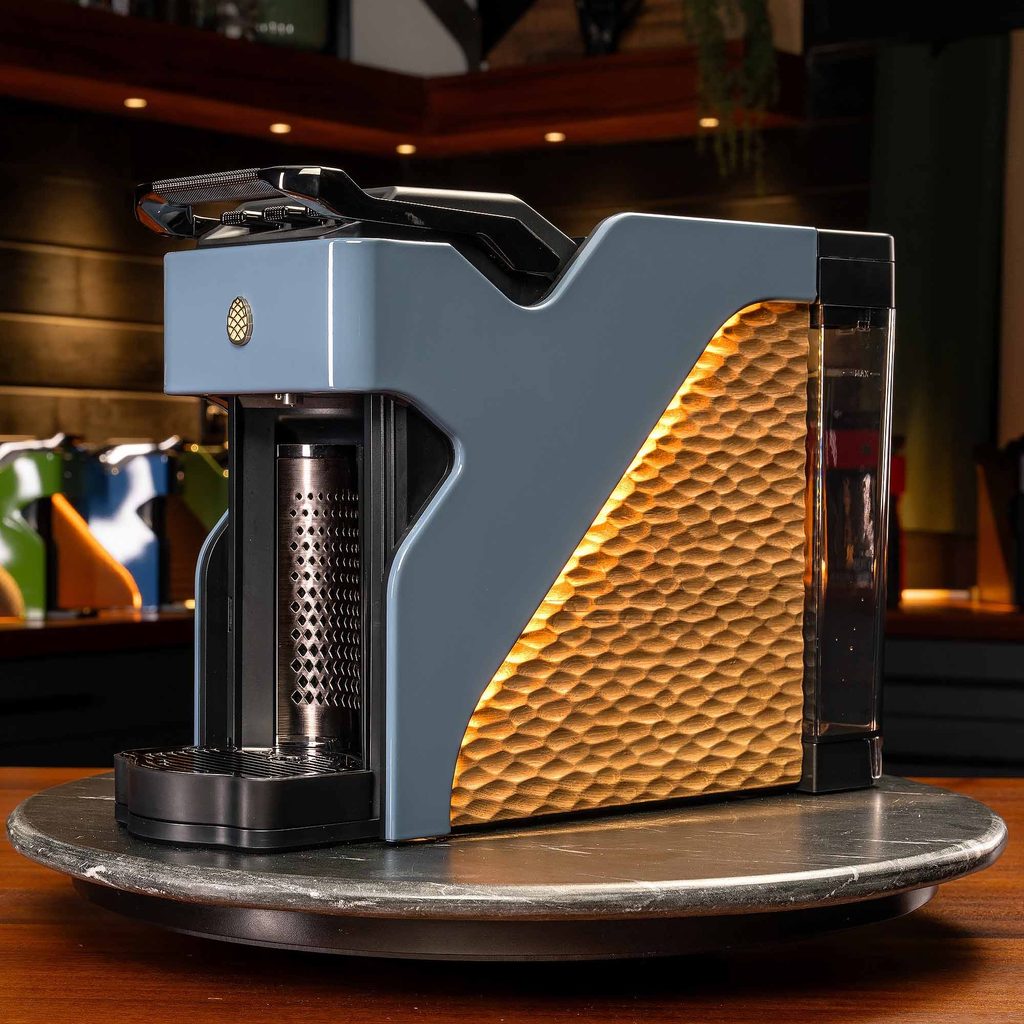
That idea became Milton Coffee Co., the company he founded in Milton, Georgia. Its first product is the Line1, an espresso machine that runs on Nespresso OriginalLine-compatible capsules. Kossoff didn’t try to replace the capsule. Millions of households already use that format, and he saw no reason to make them start over. He went after the machine instead.
The Line1 uses a stainless steel brew system in place of the plastic internals common in the category. The company describes it as the first stainless steel brew system in a pod-based coffee machine. Milton designed and engineered the platform in-house over roughly 18 months, and built it specifically to perform well with capsules from other companies rather than one proprietary line.
The second part of the business surprises people. Milton works with nearly 30 independent specialty roasters around the world that make OriginalLine-compatible capsules. Some of those roasters have had coffees on the World Barista Championship podium in the past decade. Many had little or no presence in the United States until Milton began curating and importing their capsules.
Kossoff is direct about who all this is for.
“The vast majority of people who want great coffee are not enthusiasts. They’re busy, practical people who don’t have the time or interest to become home baristas, but still care about quality and design. Most of the industry has either ignored that group or underestimated them. We built Milton for that customer.”
That view shapes how he talks about competitors. Kossoff has real respect for Nespresso, which defined single-serve coffee as a premium category, and for super-automatic makers such as Jura and De’Longhi. His criticism is about direction. Capsule incumbents, in his telling, built their machines mainly for scale and relied on plastic components. Super-automatics still depend on beans, grind and calibration, and many have added apps and connectivity to what used to be a simple morning routine. Kossoff thinks the fundamentals are where the gains are.
Early demand gave him some evidence. During its pre-launch phase, Milton reported just over 100 pre-orders, all organic, with no paid marketing or formal PR behind them. Buyers ordered standard ready-to-ship models and fully customized machines, which told the company that interest ran across both price points.
The customized end of the range is where the design side shows. Custom machines are finished by hand in Milton, Georgia, with exterior options that include wood, leather, hand-hammered metal and carbon fiber. The idea is a machine that looks like it belongs on the counter permanently, not an appliance waiting to be replaced.
The growth plan is sequenced. The United States comes first. Canada is next, followed by select European markets, where Milton can build on relationships with roasters and distribution partners already established there. Longer term, Kossoff sees a large opening in hospitality. Many luxury hotels still put low-cost plastic coffee machines in their rooms, which sits badly with everything else in the suite.
For someone whose first product is a piece of hardware, Kossoff spends a lot of time talking about coffee. He says the machine and what goes into it matter equally, and that the long-term goal is to put excellent hardware and excellent coffee in front of far more people than specialty coffee has reached so far.
His pitch to those people is modest. They shouldn’t have to become experts to drink something great in the morning.